We’re pleased to report that the consolidated financial statements for the Fundrise Opportunity Fund (the “Fund”) for the year ended December 31, 2022, are now available for your review. These financial statements have been externally audited by a top ten independent accounting firm.
Continued fund compliance
As noted in the consolidated financial statements, we believe that the Fund has continued to operate in a manner to qualify as a Qualified Opportunity Fund (“QOF”), pursuant to Section 1400Z-2 of the Internal Revenue Code and subsequently issued guidance to date. Additionally, the Fund has self-certified that it has met the requirements to be treated as a QOF with the filing of its initial 2018 federal income tax return, and has filed the results of the calculation of qualifying assets on its subsequent federal income tax returns. We believe that the Fund has met all asset, tangible property, and income tests outlined in Opportunity Zone legislation as of December 31, 2022. We will continue to closely monitor the activity of the underlying assets to ensure that the Fund maintains its eligibility.
The Fund has also maintained its status as a real estate investment trust (“REIT”) through 2022 in which a formal election was made in our federal income tax return for the tax year 2019.
Due to our significant experience as a REIT manager (we currently manage 13 individual REITs), we believe that we, as the manager of the Fund, are well-positioned to execute a Qualified Opportunity Zone REIT strategy, which could offer additional tax savings to our investors.
The Fundrise Opportunity Fund: Update
Continued progress despite the challenging macroeconomic backdrop
Since our last update, the Fund portfolio has continued in much the same manner, with the assets making steady progress on their respective long-term business plans while the financial markets and broader economic environment continued to act as a headwind to near-term valuations. As we discussed in our 2022 year-end letter to investors, the Federal Reserve’s ongoing efforts to combat inflation by raising interest rates and generally tightening the money supply has had the broad effect of lowering asset prices across almost every sector, with real estate and commercial office properties, in particular, being notably impacted.
Given the Fund’s minimum hold period of ten years and the nature of economic cycles, it was always somewhat inevitable that we would have to operate through a downturn of some sort (although a pandemic followed by the first inflationary period in 30+ years may not have been our highest probability scenario). As such, we intentionally positioned the portfolio to not only be capable of weathering such a period but in many ways to take advantage of it.
As a result, despite most new developments across the industry being put on hold, we are continuing to push forward with the construction and development of several assets. We hope that we may actually see some benefits in the way of falling materials and labor prices after what has been a three-year period of record-high growth in both areas. Additionally, we are taking the opportunity to work through the permitting and approval processes, again hoping that the general slowdown in development means that we may see some amount of cost savings. The past three years have been extremely difficult when it comes to obtaining city approvals with significant delays arising with the pandemic. At the same time, we are taking advantage of our ability to be patient, and are focused on the delivery of our pre-leased spaces and the impact that these occupancies, including several notable tenants, will bring in increased traffic, visibility, and stronger lease rates to the neighborhood.
Overall, despite the dim outlook for office assets in many major metro markets, we feel confident about the long-term growth potential of the Fund portfolio as an outlier to this trend. The portfolio is comprised of buildings with unique historic character, many of which are of a size commensurate with single-tenant occupancy. Both factors have proven attractive in the post-pandemic market. Given that we are less than halfway through the intended hold period, we remain largely on schedule in terms of project timelines. We plan to continue to deliver assets and execute the strategy of realizing a majority of potential returns on the tail end of the Fund’s life. These returns will be realized via substantial growth in market rents thanks to the steady improvement and increased demand in the neighborhood.
Notable asset-level updates
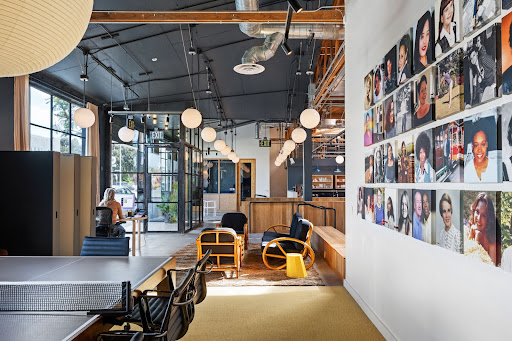
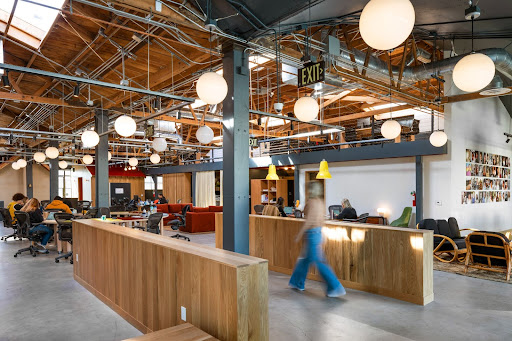
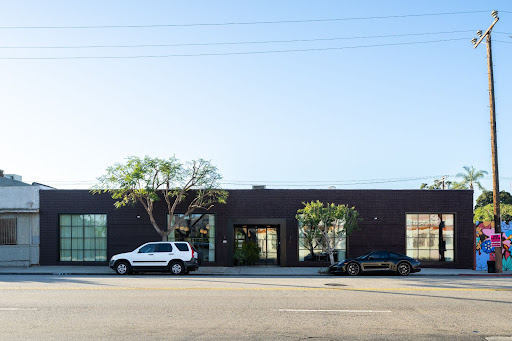
One of our largest projects, and an anchor in the neighborhood, our mixed-used redevelopment project continues to make good progress as we complete the build-out for a Michelin-Star-rated restaurateur. Our tenant is planning to open a large market-style restaurant and food hall in partnership with a number of local chefs. We expect our portion (as landlord) of the build-out to be completed in the coming months, with the tenant completing the majority of their work in the summer and fall.
We are seeing increased interest in the remaining corner space of the property. To capture the impact of the food hall opening, we will lease this last space after the restaurant opens. We believe this space will command outsized rents once the co-tenancy opportunity and the prime corner location are tangibly visible.
Meanwhile, on the other side of the block, Somesuch, the Oscar-winning studio we touched on in our previous update, took possession of the property earlier this year. Somesuch is completing its own tenant build-out with plans to occupy the space by mid-to-late fall. By this time next year, we expect this project to represent a turning point in the area's growth and serve as both an anchor and catalyst for the next phase of growth in the portfolio.
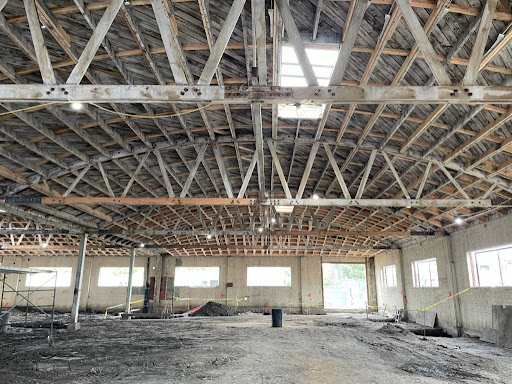
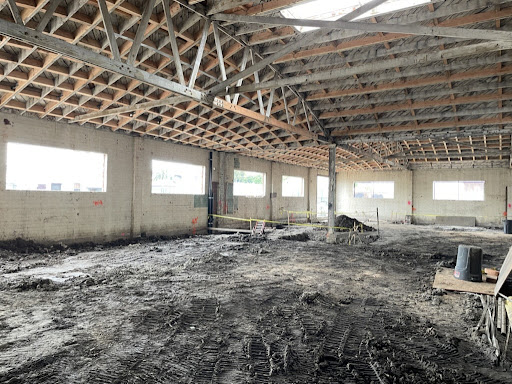
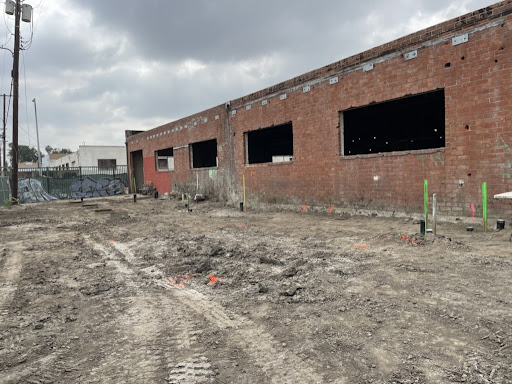
A few blocks away, our largest asset (by potential development square footage), the [ground-up office development](https://fundrise.com/real-estate-assets/289/view), has advanced through the schematic design process. Given the demand for such properties and the uniquely challenging financing environment, we have made the strategic, near-term decision to opt for short-term/temporary uses, allowing us to carry the asset while bringing more traffic to the area. Again, once several of the other projects along the corridor and at this intersection specifically deliver (which we expect to occur within the next 24 months) we believe that the unique, near full block nature of the site, will be potentially attractive to a larger user interested in the area and willing to pay a premium for the on-site parking, flexibly designed suite configurations and outdoor areas, in addition to the appealing location.
Beyond the construction and development work, we’ve continued to manage the overall cash position of the Fund to ensure that we are both meeting the requirements of the Opportunity Zone regulations while also ensuring sufficient reserves and liquidity to operate the portfolio through a potential extended downturn.
To this end, we closed on a 10-year loan last year on our first completed project at 3627 West Jefferson. The first 5 years of the loan are at a fixed rate of 4.75%, significantly below current rates for such borrowing (the current WSJP rate is 8.00%), with the proceeding 5 years floating at the WSJP rate. The loan is also interest-only for the first 18 months.
Additionally, we recently decided to sell one of our LA assets in the pre-development phase. While we had not been actively marketing the site, we were approached by an owner-user who was interested in paying a premium for the site in order to find a long-term home for their business. After evaluating the offer, we concluded that given the more difficult lending environment, the additional cash reserves would be valuable to the portfolio, while bringing yet another strong operator to the street. This creative media purchaser will not only move to the street but also invest a significant portion of their own funds into developing the property, which will have positive overall knock-on effects for the neighborhood. In the end, we sold the asset for $7,200,000, a 5.9% increase over our purchase price of $6,800,000 two years earlier.
We’re also currently evaluating a sale of our one Washington, DC-based asset. While we’ve gone through much of the design and permitting stage to convert this asset to a small multifamily rental, given the one-off nature of the asset relative to our core LA portfolio, and the changes in the DC market post-covid, we have concluded that we may be able to generate higher returns by selling to either an owner-user or condo developer (the Fund cannot develop condos for sale under the regulations). We will then be able to redeploy that capital into the other assets in the portfolio. As we have further updates here we will continue to share.
Fund performance
As was true for nearly every real estate fund over the course of 2022, the Fund saw a slight write-down in NAV over the past twelve months. That said, given how significant the write-downs were for many non-Fundrise funds, especially those with exposure to commercial and office assets (the All US REIT index for example was down more than 25% on the year) we were pleased with how well the values of the portfolio held up. Additionally, because the Fund is still in the midst of the heavy value-add and construction period, with very few assets generating net positive cash-flows, we would typically not expect to see much in the way of write-ups, regardless of the external environment.
Looking ahead
We continue to feel confident in the long-term potential of the portfolio. The underlying macro-drivers supporting our specific strategy remain strong. And, as mentioned previously, despite the macro headwinds around most commercial assets in major metro markets, we are continuing to see positive momentum with an increasing number of interested users inquiring about the portfolio unsolicited.
Our experience in urban infill development has always been that the market moves slowly until a critical mass of new development actually delivers. Then, seemingly overnight, a street that was once mostly vacant storefronts is suddenly bustling with activity. Once this occurs, the demand (and, as a result, effective rents) increases dramatically. The key is being early, capturing enough market share, and then being patient as you allow the organic growth of the area (much of which we are supporting and driving) to ultimately filter through to asset values. While this strategy is certainly not original to us or this portfolio, we continue to feel extremely optimistic about how well the long-term hold and upfront capital-intensive nature of the Opportunity Zone regulations will pair with it.
As always, we will continue to update you as progress is made across the portfolio, but please do not hesitate to reach out if you have any questions at investments@fundrise.com