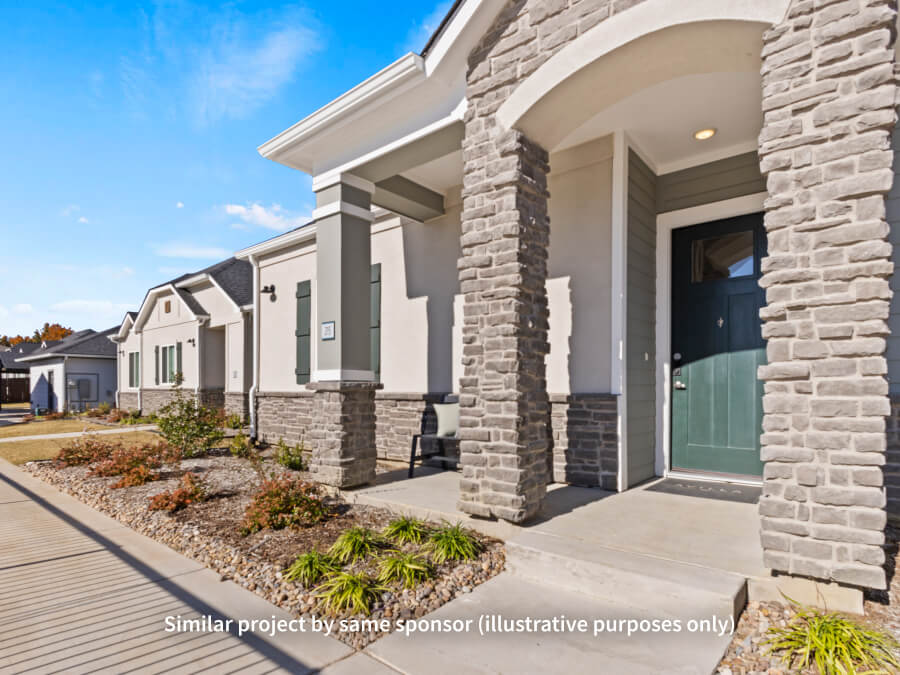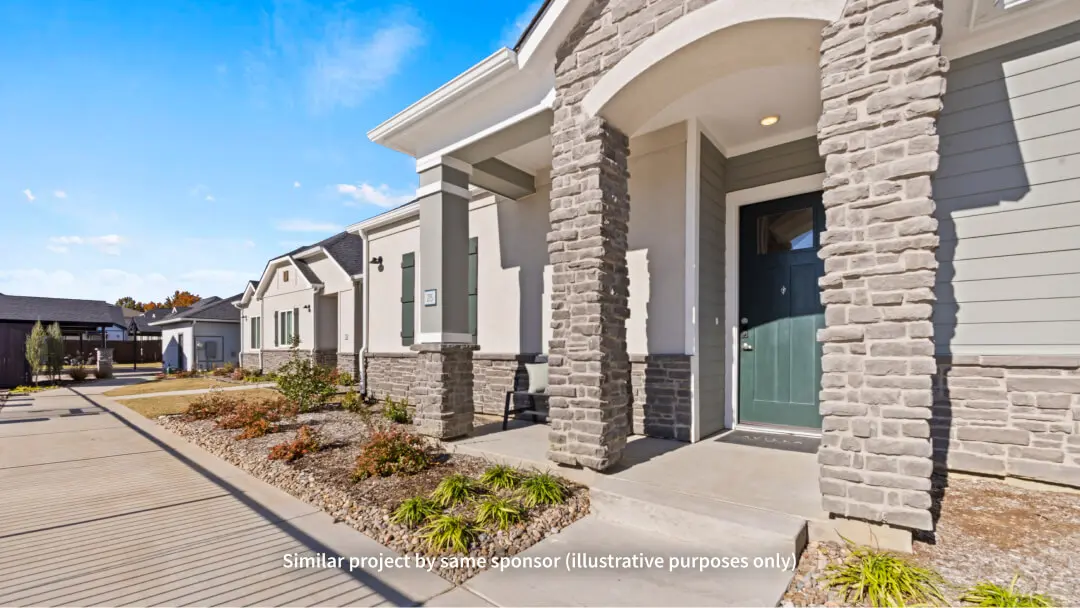
As part of an increased focus on Opportunistic Credit, we’ve invested roughly $13.4 million to provide financing in the form of mezzanine debt for the development of a new horizontal multifamily community near Phoenix, AZ. We believe that because of the current macroeconomic conditions and dislocation in the credit markets, we are able to deliver higher risk-adjusted returns than were previously available. In this instance, under the terms of the investment agreement, the borrower has agreed to pay us a fixed annual rate of SOFR (Floating rate) + 10.25%1 that will accrue for as long as it takes to finish the project, and our investment will be paid back upon its completion.
Strategy
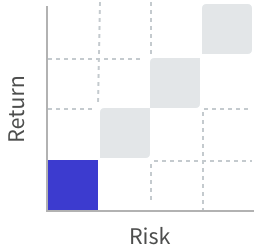
Fixed Income
Provide real estate backed loans or similar structured financing
- Risk-return profile: Low to moderate
- Expected timing / delay of returns: Typically immediately after acquisition
- Expected source of returns: Interest income
Note that this section is intended to provide a general overview of the Fixed Income strategy for educational purposes only, and is not meant to be representative of the specific details of any individual investment. All investments involve risk and there are no guarantees of any returns.
What is horizontal multifamily?
From an operational / business plan perspective, a “horizontal” multifamily community is essentially identical to a traditional apartment community: that is to say, it consists of a single property that’s improved with many rental dwellings, each of which is leased to an individual tenant.
However, rather than being built like traditional apartments where each unit takes up only a small part of a larger, multi-story building, a horizontal multifamily community is made up of many single-story duplexes and detached homes, with each rental unit having its own private entrance, and, in many cases, reserved parking and a fenced-in backyard. “Horizontal multifamily” specifically describes a wholly for-rent community of homes.
Business plan
Our loan will be used to finance the construction of this new community, which the borrower expects will take roughly two years to complete. At that point, they plan to lease up the units and pay back our loan via a sale. Under the investment terms, this investment will receive priority ahead of the common equity (i.e., the borrower's equity) in terms of any distributions, profits, or payback. By structuring this investment (and most of our other investments in construction) like debt, we aim to mitigate risk to your principal and negate the impact of delays on performance.
The borrower has agreed to pay us a floating interest rate, which adjusts quarterly, moving up or down to reflect economic or financial market conditions. This kind of floating agreement can be advantageous in an environment with volatile interest rates, such as we’ve seen since mid-2022. In this case, the borrower must pay us SOFR (Floating rate) + 10.25%1 annual rate for as long as it takes to finish the project. This means that delays do not negatively impact returns as long as the project eventually reaches a successful completion. To further increase the margin of safety, the sponsor signed as a guarantor for the debt. In addition, the sponsor invested an amount of equity representing approximately 20% of the total expected costs, similar to our investment but junior to our position. That means they would lose their entire investment before our principal was threatened.
Our approximately $13.4 million investment represents our full commitment to the project, which will draw down over time upon completion of agreed-upon milestones, such as foundation, framing, roofing, etc. Our team reviews detailed third-party progress reports before approving each draw, limiting the amount of principal at risk at any given point.
This investment was made by two Fundrise funds, the Fundrise Income Fund, which invested roughly $2.7 million, and the Fundrise Opportunistic Credit Fund, which invested roughly $10.8 million.
Dislocation in Credit Market Creates Opportunity
As we referenced most recently in our 2022 year-end letter and our podcast entitled “The Great Deleveraging,” we believe the current macroeconomic environment has created a temporary period of market dislocation and, as a result, there exists a window of opportunity, specifically in the credit and lending markets, to achieve outsized returns relative to actual risk.
Consequently, we are seeing attractive opportunities to invest in high-quality assets or developments that are in the midst of value-enhancing activities — such as construction, renovations, or lease-up — before they reach stabilization and are ready for long-term fixed-rate debt or a sale. We believe that these opportunities can deliver a highly attractive risk-adjusted return by focusing on creditworthy borrowers.
While we often gravitate towards mezzanine debt and preferred equity investment structures given our preference for the risk-return profile, we believe the current dynamics are even more favorable for such a structure, and we expect to see lower relative loan-to-value/loan-to-cost (i.e., risk) paired with higher effective returns.
Why we invested
-
Prime location: The community is located twenty minutes northwest of downtown Phoenix, the fifth largest city in the country and the fastest-growing city for population growth from 2016-2020, and the second fastest from 2020-2021.
-
Healthy local economy: In 2022, the Phoenix area’s population grew by 1.3%, a much faster rate than the national average of 0.4%, and is expected to double in the next two decades, according to the U.S. Census. Phoenix continues to draw people due to its diverse economy, driven by technology, manufacturing, bioscience research, and advanced business services. The growth and expansion of Phoenix’s economy continue to make it attractive to both renters and homebuyers.
-
Attractive margin of safety: The sponsor invested an amount of equity representing approximately 20% of the total expected costs, similar to our investment but junior to our position. That means they would lose their entire investment before our principal was threatened.
As always, if you have any questions or feedback, please visit our help center or reach out to us at investments@fundrise.com.