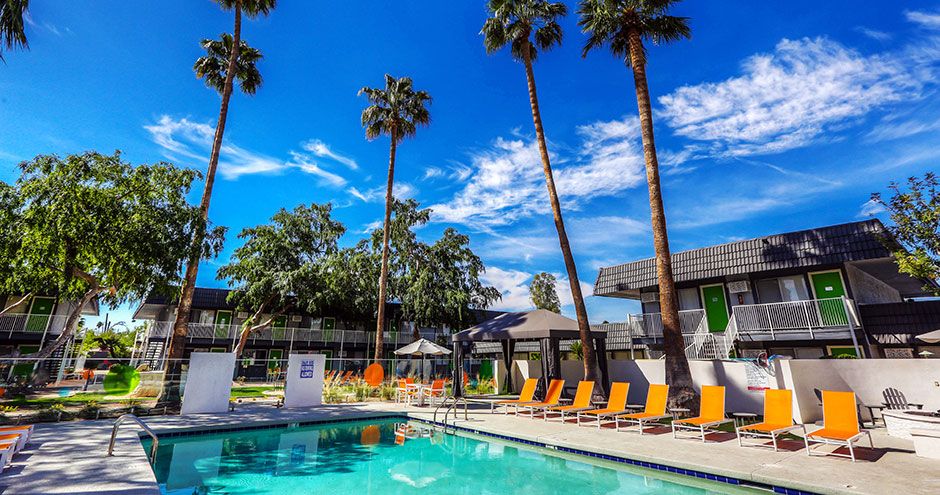
In April 2017, we invested $2.5 million in the Studio 710 Apartments, a 239-unit apartment complex in Tempe, Arizona, as a part of your Fundrise portfolio. Today, we’re pleased to announce that the borrower recently sold the property and paid back our investment, which achieved a roughly 10% annualized return¹ over the shorter than anticipated term.
The borrower’s plan was to hold the property for approximately ten years, with the expectation that stable demand from nearby Arizona State University and major employers including Google, Microsoft, and Amazon, would support consistent rental income on the property.
However, they saw strong interest in the cash-flowing property and ended up selling the property for roughly $26.8 million, an attractive price given the property was acquired by the borrower for roughly $19.2 million just two years earlier.
It’s tempting to look at a successful execution like this one and conclude that we should have invested equity in this project, which would have enabled us to participate in the upside (as opposed to earning a fixed 10% return).
At this stage in the market cycle, however, results like these are becoming the exception rather than the rule. An equity investment would have left no cushion against loss of principal had the property underperformed.
At Fundrise, we tend to follow the advice of the great value investor Seth Klarman, who said, “Take care of the downside, and the upside will take care of itself.” We continue to believe that a disciplined approach that minimizes downside risk will result in superior performance over the long term, even if that means occasionally missing out on a big “pop”.
Investor FAQ: How does an individual project impact your portfolio?
This investment was structured like debt, where the borrower must pay us a fixed rate of return before they can earn a return for themselves, and their equity provides us with a cushion against losses. Throughout the term of the investment, the regular income it generated has supported quarterly dividends for the Heartland eREIT.