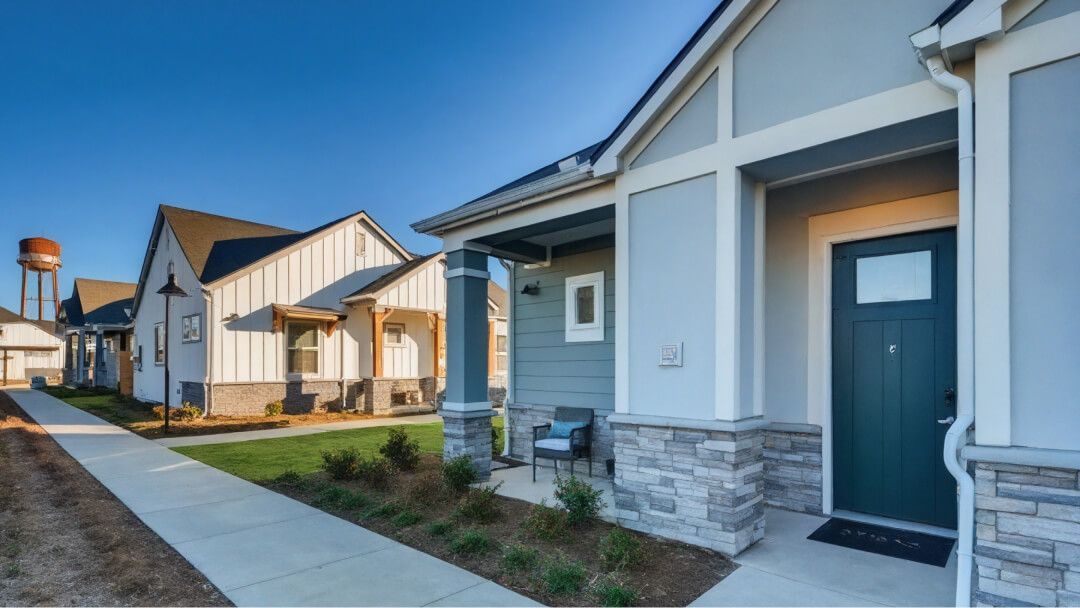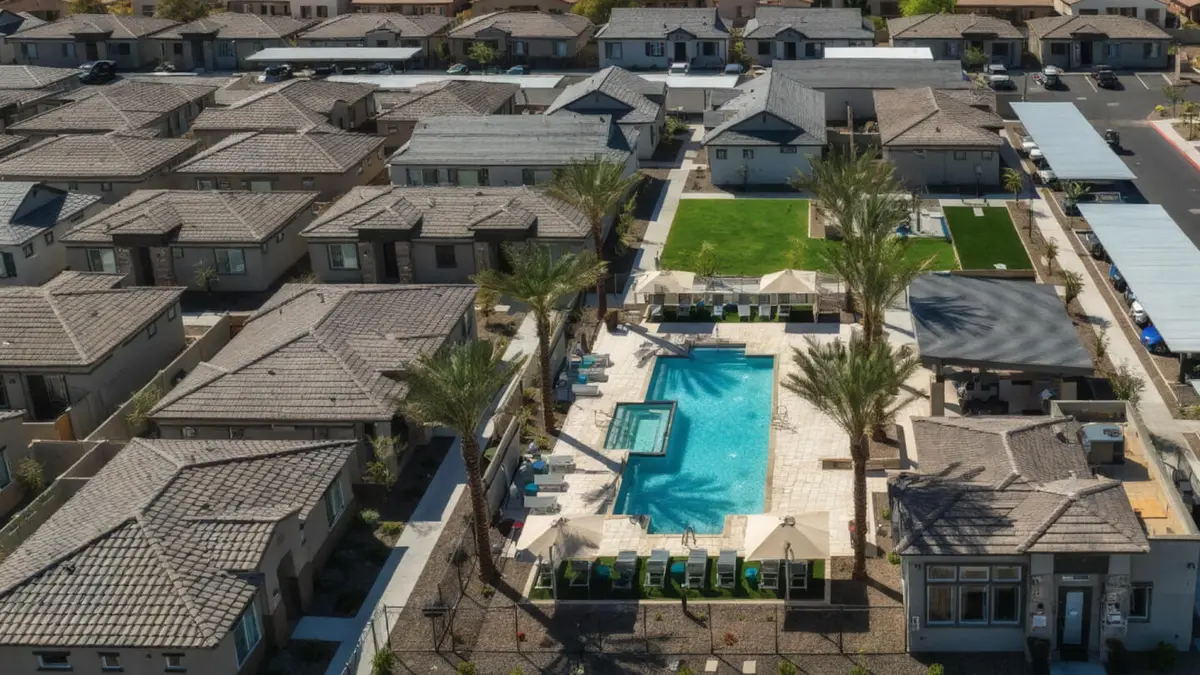
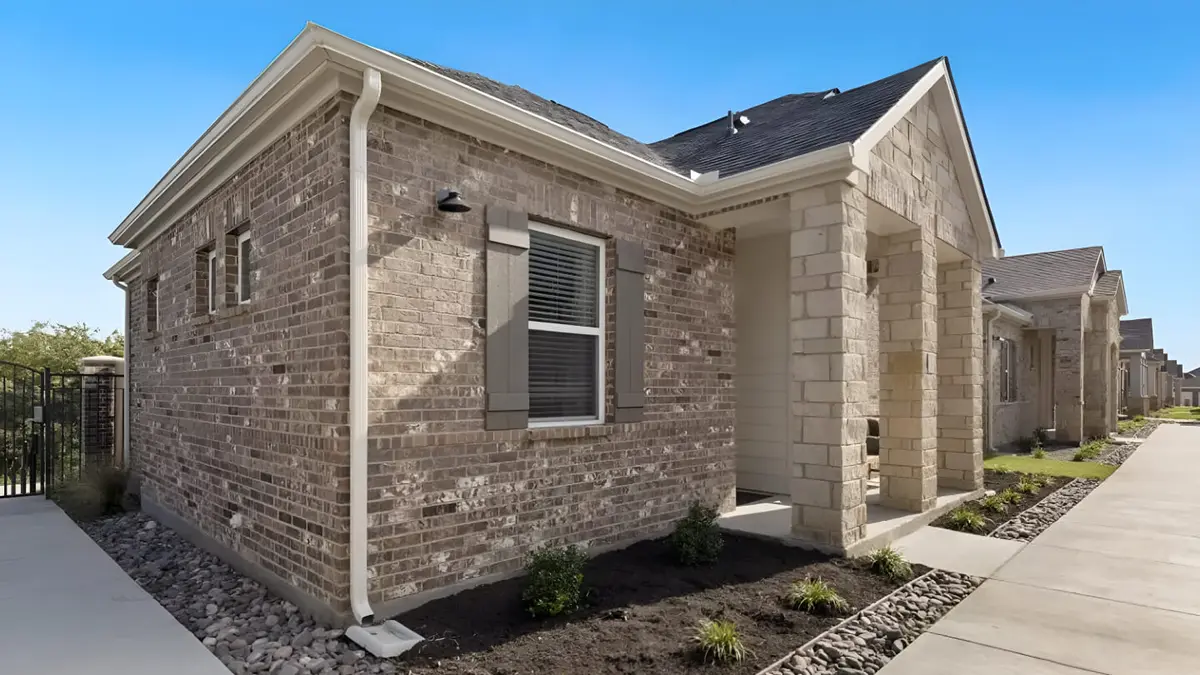
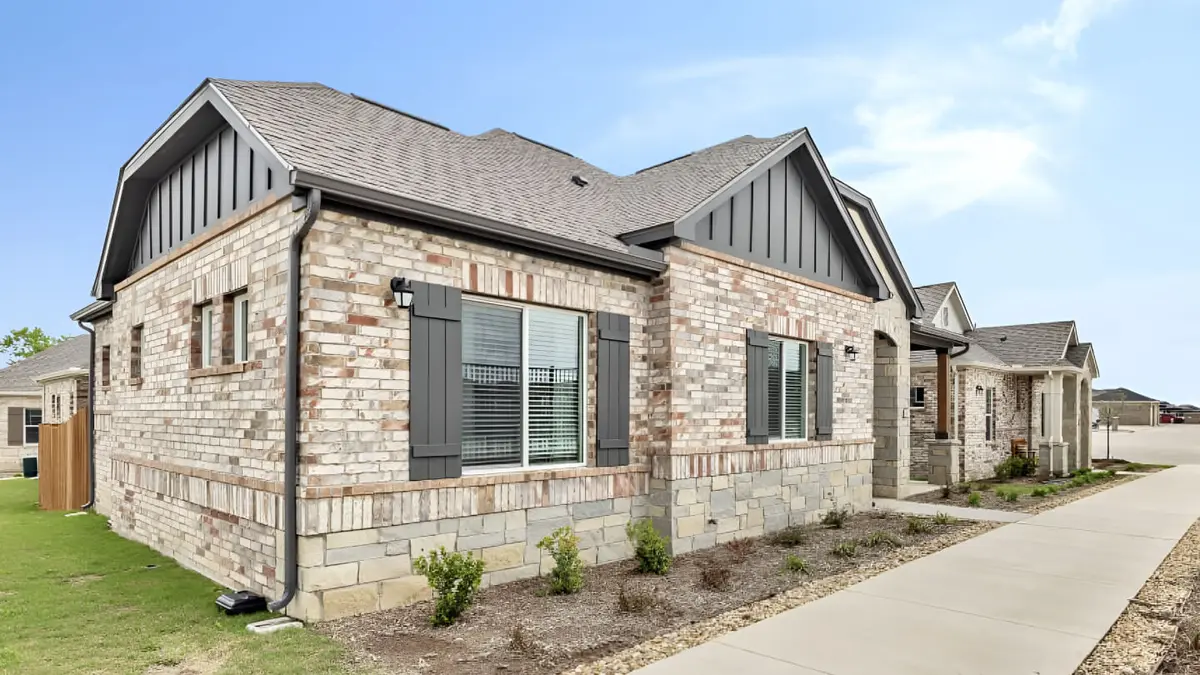
We have made four new preferred equity investments in stabilized build-for-rent communities across the Dallas-Fort Worth and Phoenix metro areas as part of a single portfolio recapitalization alongside a sponsor we have worked with for a number of years, with each position structured to earn a 13.50% annualized gross rate.
Investment highlights
- Investment type: Preferred equity
- Projected return: 13.50%¹ annualized gross rate
- Term: 3 years
Investment Overview
These four investments are backed by a portfolio of stabilized build-for-rent communities across Dallas-Fort Worth and Phoenix; two Sun Belt markets where population growth, affordability dynamics, and suburban household formation continue to support long-term rental demand.
The Dallas-Fort Worth properties span three distinct suburban growth corridors:
- Forney Horizontal Multifamily, southeast of Dallas
- Melissa Horizontal Multifamily, north of the metro in Collin County
- Princeton Horizontal Multifamily, northeast of Dallas.
Each location reflects a similar underlying theme: renters moving farther from the urban core in search of newer housing, more space, and better relative affordability.
The fourth property, Phoenix Horizontal Multifamily, is located in the western Phoenix metro, where build-for-rent communities have become a natural fit for households seeking the privacy and livability of a single-family home without the cost or commitment of ownership.
Importantly, these investments are recapitalizations of stabilized, income-producing properties, meaning they are already built, already leased, and already generating rental income. The capital from our investments will be used to pay off existing debt on the four properties, replacing it with a new capital structure.
For investors, the key advantage is straightforward: gaining exposure to assets with established operating histories and a seasoned sponsor that has experience with this product type across multiple market cycles and geographies.
Why build-for-rent remains a focus area
Build-for-rent communities, also referred to as cottage-style or horizontal multifamily, are designed to give residents many of the features associated with single-family living — private entries, outdoor space, single-story layouts, and lower-density communities — while retaining the convenience and professional management of an apartment community.
Demographic shifts, the widening affordability gap between renting and owning, and sustained undersupply of entry-level homes have together created a durable cohort of renters who want more space and privacy than a traditional apartment provides but aren't positioned, or don't want, to own. Build-for-rent communities serve that demand directly.
It is also a format we know well. Over the past five years, Fundrise has invested in build-for-rent communities across our funds both as an owner and as a credit investor.
Local insights from RealAI
Dallas-Fort Worth
According to RealAI, Dallas-Fort Worth MSA demonstrates a compelling affordability story, where above-average household incomes and below-market housing costs have combined to sustain renter demand through a supply-heavy cycle. At 8.3 million residents and job growth of 2.79% against a national rate of 2.11%, the market's underlying fundamentals have remained intact.
RealAI also noted that the market’s active multifamily pipeline has contracted to its lowest level in more than a decade, while occupancy has improved to 92.7%. Single-family permits are down 13%, suggesting that developers across the residential spectrum are pulling back at the same time.
Meanwhile, professional services, technology, and healthcare together account for 45% of employment, the highest concentration among Texas markets, while median household income grew 1.5% over the past six months. These dynamics support a renter base that includes young professionals and dual-income households — residents who may want more space and privacy than a traditional apartment provides, but are not necessarily ready or willing to buy a home.
Phoenix
Like many high-growth Sun Belt markets, Phoenix has been working through a period of elevated new supply, which has weighed on rental growth and occupancy across parts of the market. But that supply cycle appears to be correcting. RealAI cited that permits are down 14% year-over-year, and industry projections point to a 67% pullback in multifamily deliveries by 2026.
At the same time, the market’s demand drivers remain intact. Phoenix continues to benefit from above-average household income growth, employment growth that outpaces the national rate, and major long-term job catalysts, including the continued expansion of TSMC’s semiconductor campus in North Phoenix.
What backs these investments
As a preferred equity investor, Fundrise holds a senior position to the sponsor’s common equity in the capital structure of each property. That positioning means our investment is structured to receive its stated return and repayment before common equity participates in distributions.
That distinction is especially important in the current private credit environment. It's important to understand that not all private credit is the same. At Fundrise, we lend almost exclusively against real assets — physical, income-producing properties in strong markets with real equity behind our position.
These four investments reflect that approach directly: preferred equity against stabilized build-for-rent communities, in high-demand markets, with an operator whose track record in this product type is among the longer ones we've worked with.
Looking ahead
Deploying capital across four properties simultaneously with a single sponsor reflects the kind of relationship that develops over multiple transactions and market cycles. These investments also strengthen both funds' income profiles. The 13.50%¹ gross return contributes to the Income Real Estate Fund's recent 8%² annualized distribution rate, while also supporting the Opportunistic Credit Fund II's recent 11%² annualized distribution rate.
Beyond these investments, we continue to see a robust pipeline of residential real estate credit opportunities involving sponsors we know, assets we understand, in markets where new supply appears to be moderating.
If you have any questions, feel free to reach out to our Investor Relations team at investments@fundrise.com.